100% Completion
Complete- Time
- 8 hours
- Difficulty
- Moderate
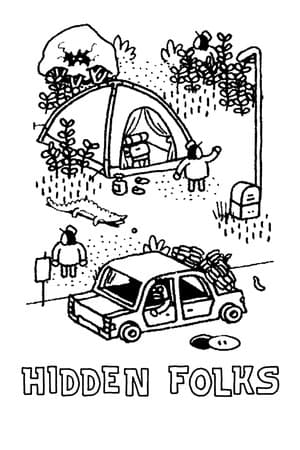
A charming interactive hidden-object game whose hand-drawn scenes and mouth-made sounds are delightful until the final searches become pure scanning.
Completion
Highlights & caveats
Scenes are playful
Opening doors, moving bushes, poking machines, and disturbing tiny routines make searching tactile.
Audio gives it identity
The mouth-made sound effects turn every click into a little joke without needing dialogue.
No pressure fits
There are no timers or fail states, so the best sessions feel like wandering through a busy drawing.
100% is compact
Full completion took 8 hours, which is enough time to see the idea without living in it.
Eye strain is real
Large black-and-white scenes can turn late cleanup into visual combing.
Last targets drag
When only one or two objects remain, the play can shrink from discovery to screen scanning.
Hidden Folks is a hand-drawn hidden-object game with a very specific charm. It is busy, silly, interactive, and full of mouth-made sound effects that make every click feel handmade.
With Hidden Folks 2 now announced for 2027, the original is easy to revisit as a reminder of why the formula worked. It is not just Where's Waldo on a screen. It is a set of little black-and-white worlds that react when you poke them.
The interactivity is the important part. You are not only scanning static illustrations. You open tent flaps, shake trees, move bushes, press buttons, and interrupt tiny routines to reveal targets. That gives the search a texture most hidden-object games do not have.
The sound design is even better. Every bark, door, machine, splash, and little exclamation sounds like it came from someone's mouth, because that is the whole bit. It could have been annoying. Instead, it gives the game a warm, ridiculous identity.
The pacing is smart for the genre. There are no timers, penalties, scores, or daily-task hooks. You look around, follow clue text, and find enough targets to unlock the next area. The best moments come from noticing a tiny joke in the margins while you were supposed to be looking for something else.
Full completion took 8 hours and stayed easygoing throughout. That is a good size for it. Long enough to explore the major scenes, short enough that the game does not need a deeper progression system to justify itself.
The same visual style that gives Hidden Folks its personality also makes late cleanup tiring. Huge monochrome scenes can be beautiful and exhausting at the same time. Once the obvious interactions are done and one target remains, the game can become a very literal eye test.
The hints help, but they do not solve the core issue. Some clues point you toward a joke, a behavior, or a region. Others still leave you combing a busy picture until the shape finally separates from the noise.
Play it if you like low-pressure search puzzles, playful interactive scenes, and small visual jokes. It works best in short sessions, especially when you are still wandering instead of hunting the last missing object.
This is a niche recommendation because the appeal is narrow. If scanning dense scenes sounds meditative, Hidden Folks is lovely. If it sounds like eye strain with sound effects, the charm will not be enough.